

The Middle East is entering one of the most critical periods of recent decades, as the military confrontation between Iran and the US takes on an increasingly direct character.
The latest developments mark a new phase of the conflict, in which Tehran appears determined to respond militarily to the US presence in the region, while Washington states that it maintains full operational readiness.
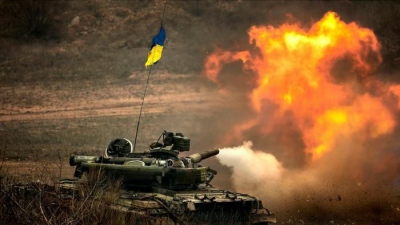
According to announcements and reports from various sides, Iran launched a new attack with ballistic missiles against a US military facility in Jordan, with reports of powerful explosions in the area where US forces are stationed.
At the same time, U.S. Central Command (CENTCOM) announced that all incoming projectiles were successfully intercepted by air defense systems, maintaining that there were no successful strikes on US facilities.
However, regional media outlets maintained that several missiles managed to penetrate the air defense and strike their targets, causing successive explosions at the base.

Missile launch from western Iran
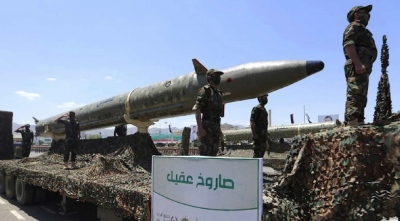
Videos circulating on social media allegedly capture the launch of ballistic missiles from the Khorramabad and Kermanshah areas, two points that historically constitute important hubs of the Iranian missile program.
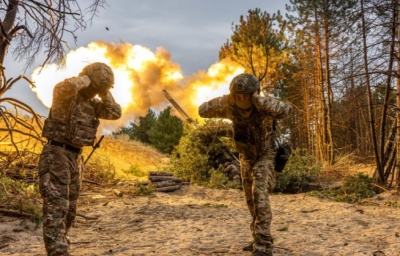
Simultaneously, Patriot anti-aircraft systems were activated in Jordan, while residents reported multiple explosions in the sky, an image that demonstrates the intensity of the operation and the degree of operational readiness of the US and allied forces.

Donald Trump's warning
The developments prompted the immediate reaction of US President Donald Trump, who warned that any attack against US forces will be met with retaliation, leaving open the possibility of a new military escalation.
This statement reinforces concerns that the confrontation is no longer limited to indirect clashes through allied organizations, but is evolving into a direct confrontation between two states with significant military capabilities.

Pezeshkian: Iran is an example of resistance to pressure and oppression
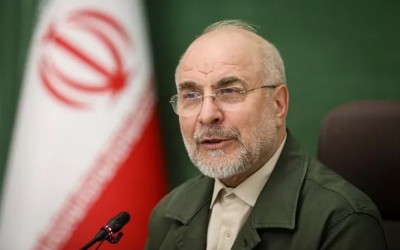
The President of Iran, Masoud Pezeshkian, stated that the country will continue to resist external pressures, emphasizing that the government's goal is to protect national sovereignty and improve the daily lives of citizens.
During the cabinet meeting, Pezeshkian stressed that a key priority of the government is strengthening the economy, improving the standard of living, upgrading education and healthcare, pointing out that all state structures must operate with a view to serving citizens.
Referring to regional developments, he maintained that the Iranian people are an example of resistance against pressure and oppression, stating that "we are fighting against the enemies so that we do not find ourselves under the weight of power and oppression", while adding that the same principle must also govern the behavior of the government toward citizens.
Qatar condemned Iran's attacks in Jordan
Qatar condemned the recent Iranian attacks in Jordan.
The Ministry of Foreign Affairs of Qatar described the attacks against Jordan as a "flagrant violation of its sovereignty and territorial integrity", warning that the continuation of such actions may lead to further escalation and complicate de-escalation efforts in the region.
In its statement, Doha called on all sides to proceed with an immediate and complete cessation of military operations and return to diplomacy, emphasizing that only through political dialogue can further destabilization of the region be prevented.

Escalation in Iraq as well
At the same time, the situation is deteriorating in Iraq as well.
The Popular Mobilization Forces (PMF) denounced US and Saudi Arabian strikes in seven provinces, reporting that at least 20 fighters were killed and 32 were injured.
The organization stated that all its units remain on high alert, warning of potential further military responses.
At the same time, the scheduled visit of the Prime Minister of Iraq, Ali al-Zaidi, to Saudi Arabia was postponed, a fact attributed to the rapid deterioration of the security situation and to the new regional balances being formed.

Iraq refutes Saudi Arabia
Iraq questioned allegations that attacks against Saudi Arabia were launched from its territory.
At the same time, the government of Iraq rejected accusations that attacks against Saudi Arabia were carried out from Iraqi territory.
A spokesman for the office of the Prime Minister and Commander-in-Chief of the Iraqi Armed Forces told the state news agency that no evidence confirming the relevant allegations has been presented so far.

Baghdad also maintained that the military operations of the United States and Saudi Arabia made investigations into the incident difficult, pointing out that Iraqi authorities continue to investigate the matter.
At the same time, Iraqi authorities announced that they are working on a new security plan aimed at preventing similar attacks and ensuring the country's sovereignty, in a period where tension in the Middle East continues to rise and the risk of a broader regional conflict remains particularly high.

CENTCOM: Blockade on 20 commercial ships under the naval blockade of Iran
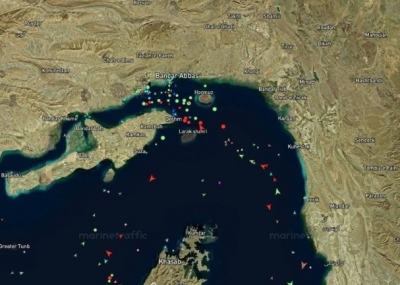
The Central Command of the United States Armed Forces (CENTCOM) announced that it has redirected a total of 20 commercial ships as part of the re-imposition of the naval blockade on the southern ports of Iran.
According to the announcement, 18 of the ships had been intercepted as of yesterday, while two more were turned away in the last 24 hours (July 29, 2026).
At the same time, CENTCOM reported that it has immobilized two ships and conducted boarding and inspection on two others.
The energy dimension of the crisis
Equally significant are the economic consequences of the escalation.
According to reports by the Wall Street Journal, the simultaneous disruption of the maritime corridors of the Strait of Hormuz and Bab al-Mandeb theoretically affects routes through which approximately one quarter of the global crude oil supply is moved.
The possibility of prolonged instability in these two strategic maritime routes is already causing concern in international markets, as a potential interruption of navigation could lead to a new rise in energy prices and broader implications for the global economy.

Explosion at LNG terminal in Egypt following drone strike on tanker
A drone struck a US-owned natural gas storage tanker in the port of Damietta, in the Mediterranean of Egypt, according to maritime security firm Ambrey.
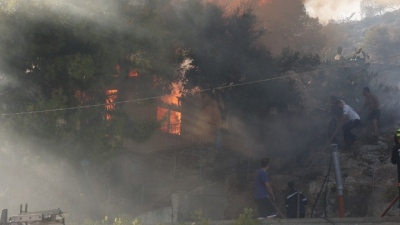
During the incident, a fire broke out on two LNG tankers, while the port services company Inchcape reported that an explosion occurred at the liquefied natural gas terminal during the unloading process.
Local authorities intervened immediately, with the involved ships being safely moved outside the port zone.
According to Inchcape, port operations are expected to resume during the night at the remaining piers and facilities.

Parallel hotspots of tension
During the same period, the humanitarian situation in the Palestinian territories continues to deteriorate.
The UN Human Rights Office reports that attacks by Israeli settlers and the expansion of settlements in the occupied West Bank have reached unprecedented levels, while health authorities in Gaza maintain that more than 60,000 minors have been orphaned since the start of the war in October 2023.
These developments reinforce Tehran's argument that the regional crisis is not limited to a bilateral confrontation with the US, but is connected to the totality of conflicts extending from Gaza to Jordan, Lebanon, Iraq, and Yemen.

The new front with Qatar
At the same time, new political contradictions emerge even among traditional allies of Washington.
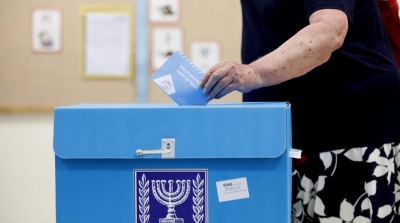
Former Prime Minister of Israel Naftali Bennett publicly accused Qatar of funding Iran's Islamic Revolutionary Guard Corps (IRGC) and stated that, if he returns to power after the October elections, he will designate Qatar as a "hostile state".
Bennett further claimed that he possesses information according to which Doha funds both the IRGC and Hamas, while attributing part of the growing international criticism against Israel, particularly in US universities, to Qatar's long-standing influence.
These statements add another dimension to the already complex geopolitical picture, as Qatar remains a key US ally and hosts the largest US military base in West Asia.

A region on the edge
The latest developments demonstrate that the confrontation between Iran and the US has now acquired characteristics of a direct military showdown, with every new incident increasing the risk of a generalized regional conflict.
At the same time, conflicting announcements regarding the effectiveness of missile attacks and air defense systems highlight that the war is being waged not only on the operational field, but also at the level of information and impression management.
What is certain is that West Asia is in a period of intense realignment.
Military pressure, energy uncertainty, political confrontations, and the humanitarian crisis compose an environment in which every new development can drastically alter balances, not only in the region but also in the international system as a whole.
Iran arrested 15 foreign agents
Meanwhile, the Ministry of Intelligence announced that security forces dismantled four operational cells of a terrorist organization and arrested a total of 15 suspects in Iran.
According to the announcement, operations were carried out in the cities of Zahedan, Chabahar, and Iranshahr, where authorities maintain that the groups were located immediately after entering the country, before being able to carry out attacks.
The ministry reports that those arrested are connected to foreign intelligence services and were planning strikes on economic, utility, and judicial infrastructure.
At the same time, it is recalled that during the first fortnight of July, four more terrorist groups had been dismantled in the same province, with two dead and ten arrests.
Authorities note that investigations continue to examine possible connections of the networks, while calling on citizens to report any suspicious activity immediately to competent services.
Moghaddamfar (Analyst): "After military failure, opponents invest in division and disappointment"
Iranian strategic affairs analyst Hamidreza Moghaddamfar maintained that, after the failure of Iran's opponents on the military field, their strategy has shifted to creating internal problems through "division, distrust, and disappointment".
Speaking on a television broadcast, Moghaddamfar mentioned that efforts are now focused on causing division in society, undermining trust toward state institutions, and creating a sense of pessimism among citizens.
At the same time, he referenced the recent statements of the Supreme Leader of Iran, Ayatollah Seyyed Mojtaba Khamenei, who called for maintaining national unity and avoiding political and social divisions, characterizing social cohesion as a basic prerequisite for safeguarding independence and the goals of the Islamic Revolution.
Moghaddamfar also maintained that this message has not been sufficiently promoted by political elites and media outlets, despite its importance for the country.
www.bankingnews.gr

Σχόλια αναγνωστών